Maryland: A Script Font with Handcrafted Elegance
In a digital world saturated with clean, geometric typefaces, there’s a growing desire for designs that feel personal, authentic, and human. We’re seeing a shift back to crafted aesthetics, where the warmth of a human hand can cut through the polished perfection of pixels. This is precisely the space where Maryland, a fresh and modern script font, finds its voice. It’s not just another script; it’s a carefully crafted tool for designers, entrepreneurs, and creators who want to infuse their work with a distinct sense of personality and charm.
The Anatomy of a Modern Handcrafted Font
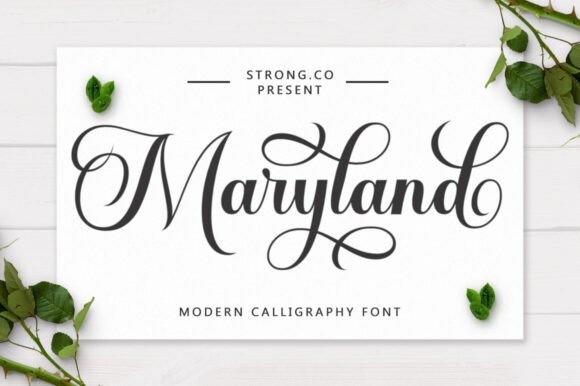
At first glance, Maryland feels both familiar and new. Its foundation is a classic calligraphic style, but it’s been reinterpreted for a contemporary audience. The letterforms flow with a natural, organic rhythm, featuring a dancing baseline that gives text a lively, energetic movement. This isn't the rigid, uniform script of old calligraphy manuals; it’s expressive and fluid. You’ll notice the decorative characters and elegant swashes that allow for custom-looking headlines and monograms, adding a layer of sophistication without feeling stuffy.
What makes Maryland a premium font is this attention to detail. The connections between letters are smooth and believable, mimicking the natural flow of ink from a brush or pen. This handwritten font avoids the common pitfall of looking digitally generated or overly simplistic. Instead, it maintains a tactile quality, as if each word was just lovingly penned on high-quality cardstock. The overall personality is one of approachable elegance—pretty enough for a wedding invitation, yet confident enough for a boutique brand logo.
Where Maryland Truly Shines: From Branding to Personal Projects
The true test of any creative font is its versatility. Maryland isn’t a one-trick pony; it’s a versatile design asset that can elevate a wide range of projects. Its strength lies in its ability to convey a sense of bespoke quality and careful curation.
- Branding and Logo Design: For small businesses, especially in lifestyle, beauty, fashion, or artisanal food sectors, Maryland can form the cornerstone of a beautiful brand identity. Imagine it as the primary typeface for a bakery’s logo, a boutique’s signage, or a skincare product’s packaging. It instantly communicates a story of craftsmanship and personal touch.
- Editorial and Publishing: In editorial design, a script like Maryland is invaluable for creating compelling pull quotes, chapter headings, or feature titles in magazines and blogs. It breaks up the monotony of body text set in a serif font or sans serif font, guiding the reader’s eye and adding visual interest.
- Marketing and Social Media: In the fast-scrolling world of social media, a touch of personality stops the thumb. Use Maryland for social media graphics to highlight key messages, create elegant Instagram story quotes, or design eye-catching promotional flyers. Its handwritten style feels native to the platform, more personal than a standard corporate typeface.
- Packaging and Physical Products: The font translates beautifully to print. Think of elegant labels for artisanal candles, gourmet foods, or cosmetics. In packaging design, Maryland can help a product stand out on a shelf by promising a story of care and quality before the customer even picks it up.
- Personal and Event Design: This is where the font’s “pretty” factor really comes into play. It’s perfect for wedding invitations, save-the-dates, greeting cards, and event programs. For crafters and hobbyists, it adds a professional polish to handmade projects, from scrapbooking to custom stationery.
Making Maryland Work for You: A Practical Guide
Adopting a new script font into your workflow requires a bit more thought than choosing a standard text face. Here’s how to integrate Maryland effectively.
Evaluating Fit and Readability
First, consider your project’s primary goal and audience. Maryland excels when used for headlines, short phrases, or accent text. Its ornate nature means it’s not designed for setting long paragraphs of body copy; readability at small sizes or in dense blocks will suffer. Always pair it with a highly legible serif font or sans serif font for supporting text. A clean, geometric sans serif often creates a beautiful contrast, letting the script’s personality shine without overwhelming the viewer.
Testing Font Pairings and Exploring Styles
Before finalizing your design, spend time testing pairings. How does Maryland interact with your chosen body font? Do their x-heights and weights feel harmonious? A good practice is to set a headline and a paragraph together and view it from a distance. Does the hierarchy feel clear? Most premium fonts like Maryland also come with a family of styles—perhaps a bold weight, an italic, or a set of decorative characters. Explore these options. The alternate swashes or ligatures can be the key to creating a truly unique logotype or monogram.
Licensing and Final Considerations
Finally, always verify the licensing. If you’re using Maryland for a client project, merchandise, or a product you intend to sell, you need to ensure you have the appropriate commercial font license. Reputable font foundries are clear about their terms. This due diligence is a non-negotiable part of professional logo design and web design, protecting both you and your client.
In the end, choosing a typeface like Maryland is a strategic design decision. It’s about selecting a tool that doesn’t just spell out words, but imbues them with feeling. It’s for the moments when you need your design to feel less like a corporate announcement and more like a handwritten note from a trusted friend. When used thoughtfully, it becomes more than just a font—it becomes a vital part of your visual story.